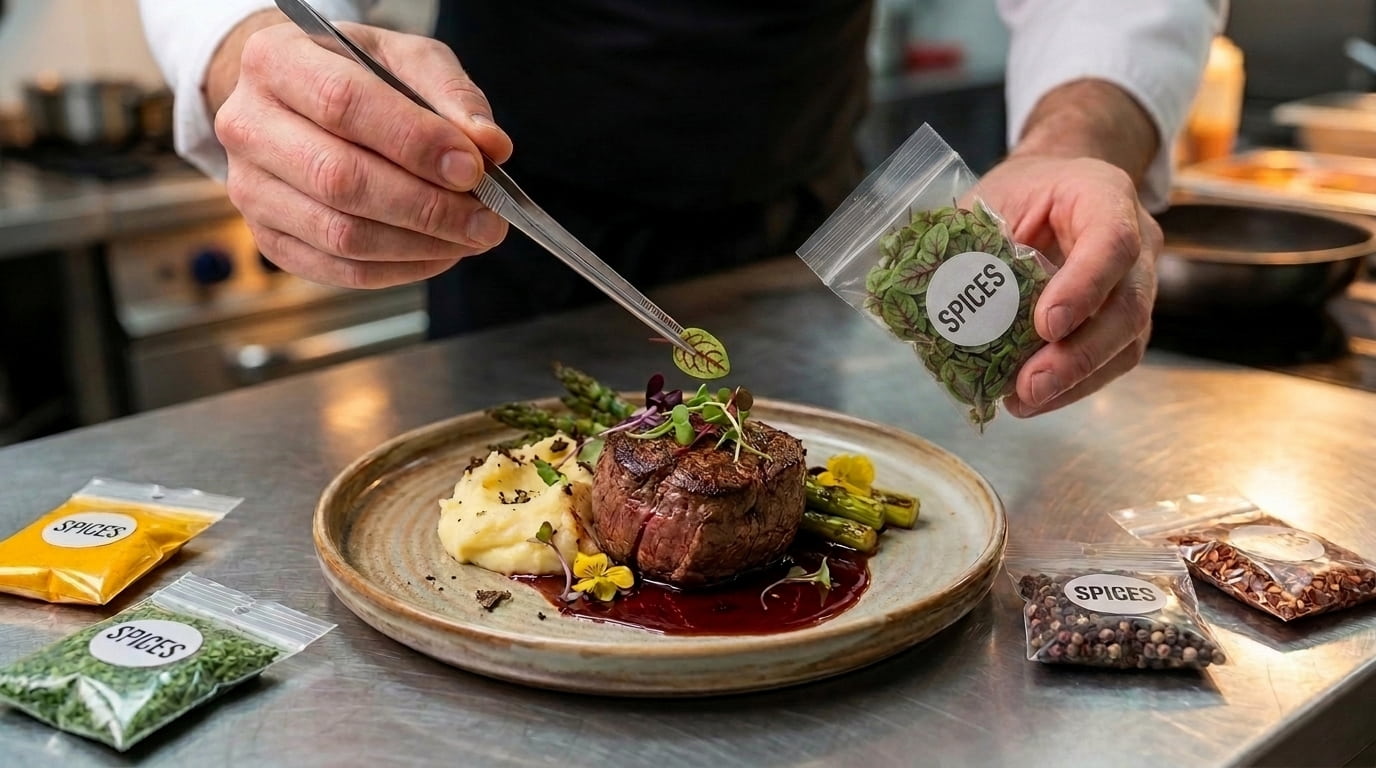
It is 12:25. Just a few minutes before the doors open. The dining room is still empty, but the kitchen already knows what is coming: orders for burgers, pasta, salads and desserts, all at once. And when that happens, nobody wants to waste time searching for an ingredient or opening a pack for the tenth time that day.
This is exactly where the difference shows between an organised kitchen and one that lives in firefighting mode. Anyone who works in hospitality knows the secret is not only cooking well — it is having everything ready before the first customer arrives.
In this guide we show you the small organisation habits that save time, cut waste and make service smoother — and the right bag for every task in the kitchen.
The Right Bag for Every Task in the Kitchen
Each moment of service has a different need. See which bag suits each task, from mise en place to stock control.
Preparing the mise en place before service
Mise en place remains one of the most important habits in any professional kitchen. Instead of chopping onion during service or hunting for the grated cheese when orders pile up, it is best to have everything ready and organised by portion or by station.
ZIP bags — in the 100×150 mm and 160×220 mm sizes — make this task far simpler. Grated cheese, diced bacon, sliced mushrooms, cherry tomatoes, chopped onion, parsley or prepared fruit stay protected, organised and ready to use. Prepare only the amount needed for one shift: ingredients stay fresher and the team works much faster during peak hours.
Small quantities and spices
Some ingredients seem impossible to keep tidy: spices scattered across the pantry, opened seeds, nuts in torn packs, mixed herbs. As the days go by, the counter fills with different packs and no one knows where anything is.
This is where smaller sizes make all the difference. ZIP bags in 40×60 mm, 60×80 mm and 70×100 mm are ideal for ingredients used in small amounts — oregano, chilli flakes, sesame seeds, cinnamon, icing sugar, dried herbs or pastry decorations. The goal is not just to store: it is to find everything in seconds, even with the restaurant full.
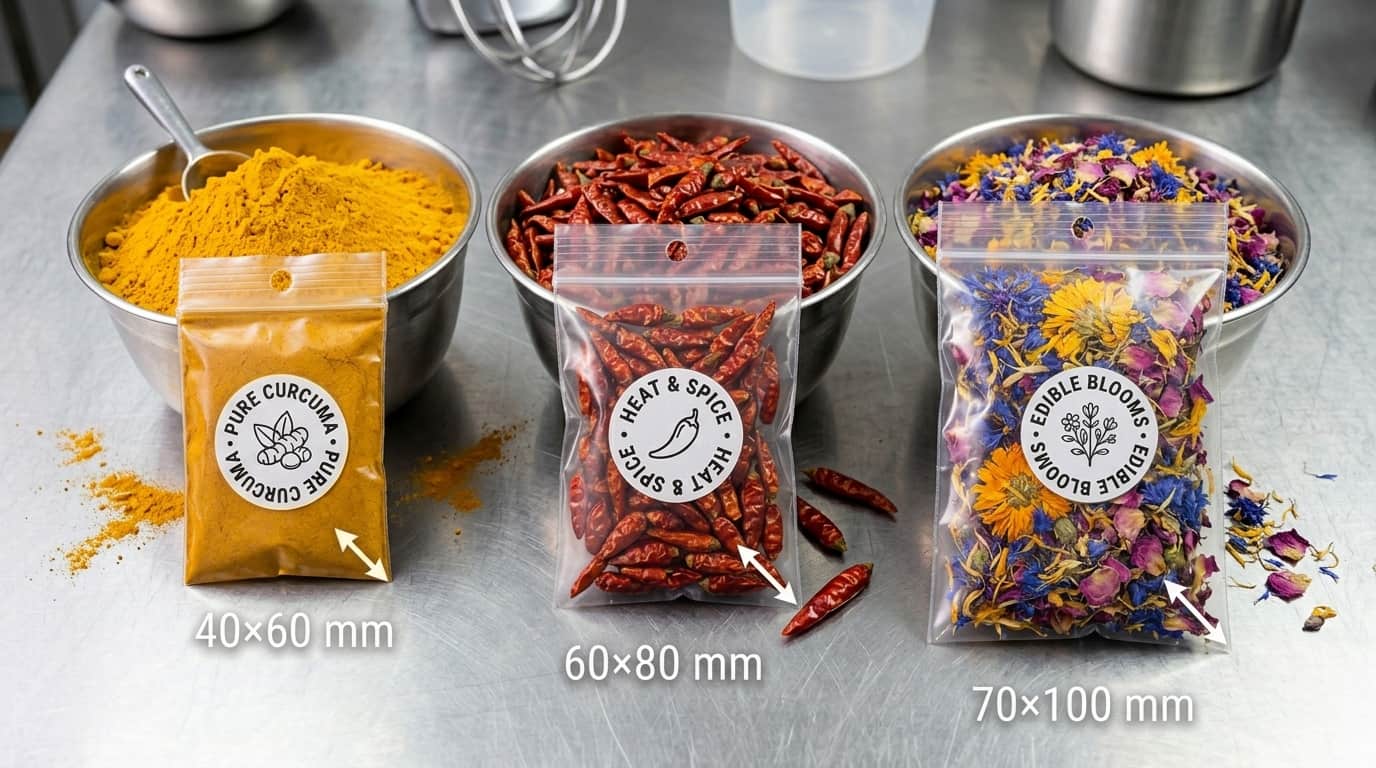
In the photo: Minigrip® Classic Bag →
Labelling and controlling stock
We have all opened a fridge that seemed to hold a bit of everything: unlabelled containers, opened packs, mixed ingredients. At the start of the day it even looks organised, but a few hours later finding an ingredient turns into a treasure hunt.
The solution is to label everything. Minigrip® bags with a Write-On Panel have a white strip where you handwrite the ingredient name and the prep date. One glance is enough for anyone on the team to know what to use — which speeds up service, makes stock control easier and cuts waste from missing labels. Set a simple rule: everything that goes into the fridge comes out labelled.
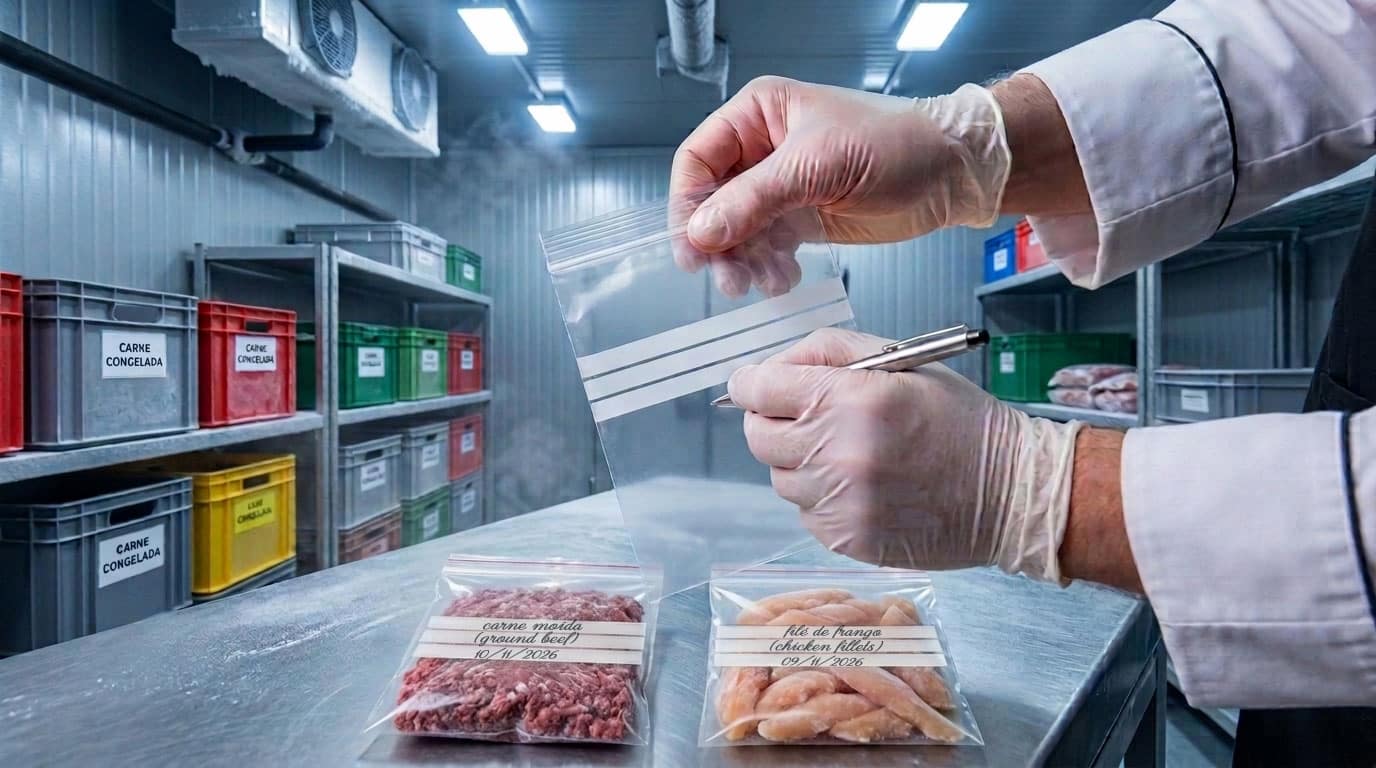
In the photo: Minigrip® Bag with Writing Area →
Pastry and gourmet shops: organisation also sells
In a pastry shop, café or gourmet store, speed is part of the customer experience. While a coffee is being made, someone assembles a bowl, finishes a brownie or adds toppings to a dessert. When every ingredient has its place, it all happens much more naturally.
Clear Stand Up Pouches — in 100, 250 and 500 ml sizes — keep granola, chocolate chips, desiccated coconut, nuts or crushed biscuit always visible and within reach; as they stand upright, they take up less space. The Paper Stand Up Pouches with a Window are perfect for selling to the public: artisan granolas, coffees, teas, spices, biscuits or snacks. Besides protecting the contents, they elevate the presentation and reinforce the brand image. In the end, it is not just packaging — it is a way to communicate quality.
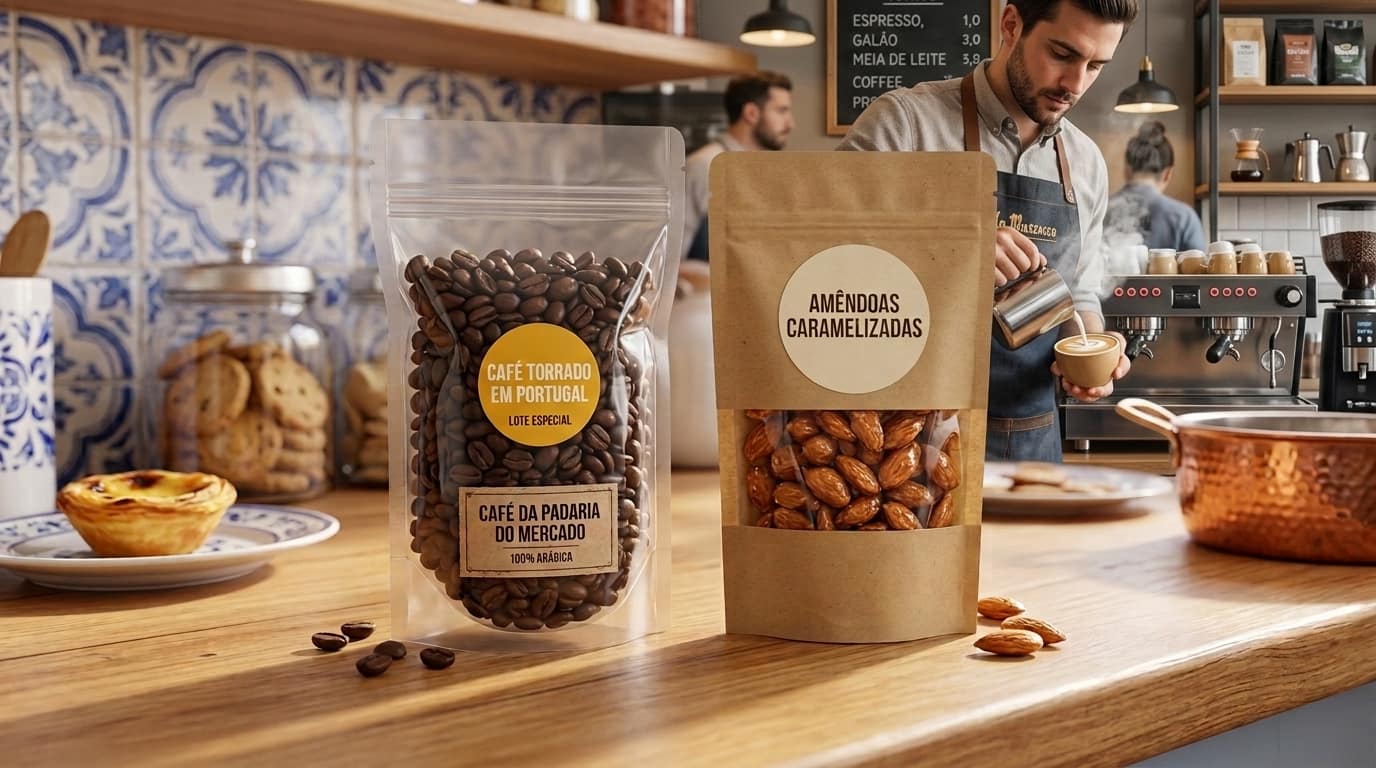
In the photo: Transparent Stand Up Pouch 250ml →
The Waste No One Sees: Time
When we talk about waste, most people think straight away of food that ends up in the bin. But there is another kind of waste that weighs just as heavily, or more, on the accounts: time.
Imagine that, over the day, each team member loses just 20 or 30 seconds every time they search for an ingredient, open a large pack or go back to the fridge because they forgot something. It seems little. Now multiply that by dozens of orders, several staff and every day of the month. This is where you realise an organised kitchen is not just about looking tidy: it helps you work faster, reduces interruptions and frees the team for what matters — cooking and serving well.
Chef's Tip: prepare the mise en place in small portions, one for each shift. Ingredients like grated cheese, diced bacon or sliced mushrooms stay ready to use and you save time on every order.
A Five-Minute Test for Tomorrow
Before your next shift begins, watch your kitchen for just five minutes and ask yourself:
- Does the team lose time searching for ingredients?
- Do opened packs pile up on the counter?
- Is the fridge really organised and labelled?
- Are the most-used ingredients already prepared?
- Are some products opened dozens of times throughout the day?
If you answered "yes" to any of these, you probably do not need to change the way you cook. You may just need to change the way you organise. And often that change starts with something as simple as choosing the right bag for each task.
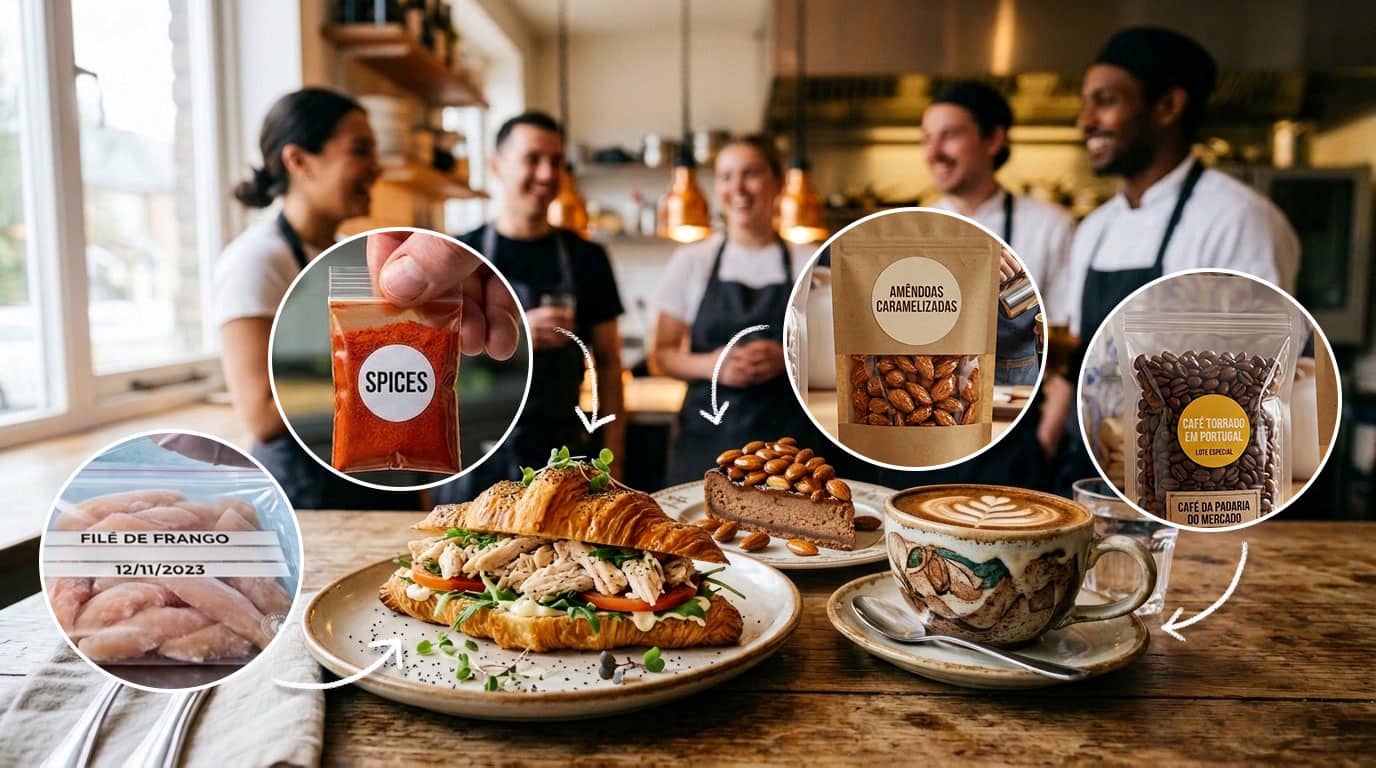
In the photo: Minigrip® Classic Bag →
Small Habits Build Great Kitchens
When we think of a professional kitchen, it is easy to picture modern ovens and experienced chefs. But many improvements come from small changes almost no one notices: separating ingredients before service, labelling food, organising the fridge, preparing small portions and protecting each ingredient properly.
ZIP, Minigrip® and Stand Up bags are part of those small decisions. They do not replace a good team or a good chef, but they help those who live hospitality work with more speed, less waste and far more organisation. Because an efficient kitchen is not the one that runs the most — it is the one that was already prepared before the first customer walked in.
At Espírito Rebelde you will find ZIP, Minigrip® and Stand Up bags for every task in your kitchen — from small sizes for spices to write-on bags for stock control. Because the difference between chaotic service and calm service often starts with a simple gesture: preparing each ingredient in the right bag.
Featured Products
Latest Posts

The small habits that make a professional kitchen faster and tidier: mise en place, ZIP, Minigrip and Stand Up bags to cut waste and serve better.

Which bottle for each handmade cosmetic? Amber glass for oils and serums, jars for creams, perfume bottles and samples. A packaging guide to help you sell.

What a security seal does for your bottle and how to choose between 18 mm, 24 mm and 31.5 mm. Step-by-step sealing, mistakes to avoid and a checklist.

Easy summer recipes in glass jars and bottles: strawberry ice cream, overnight oats, cheesecake, piña colada and pink lemonade. Fresh and ready to go.