
Some recipes travel across generations. A few begin in an old family notebook, others are born from fruit picked in the garden or from the wish to prepare a special gift. They all have something in common: time. Making homemade liqueur is far more than mixing fruit, sugar and alcohol — it is about respecting every stage and turning simple ingredients into a drink full of personality.
A good liqueur can stand for a family lunch, a Christmas tradition, a gift prepared with love or the start of a small business. In this guide you will find everything you need: a simple base recipe, the most common mistakes to avoid, good preservation practices and how to choose the ideal bottle for every occasion — because it is at the moment of bottling that the liqueur finally gains its identity.
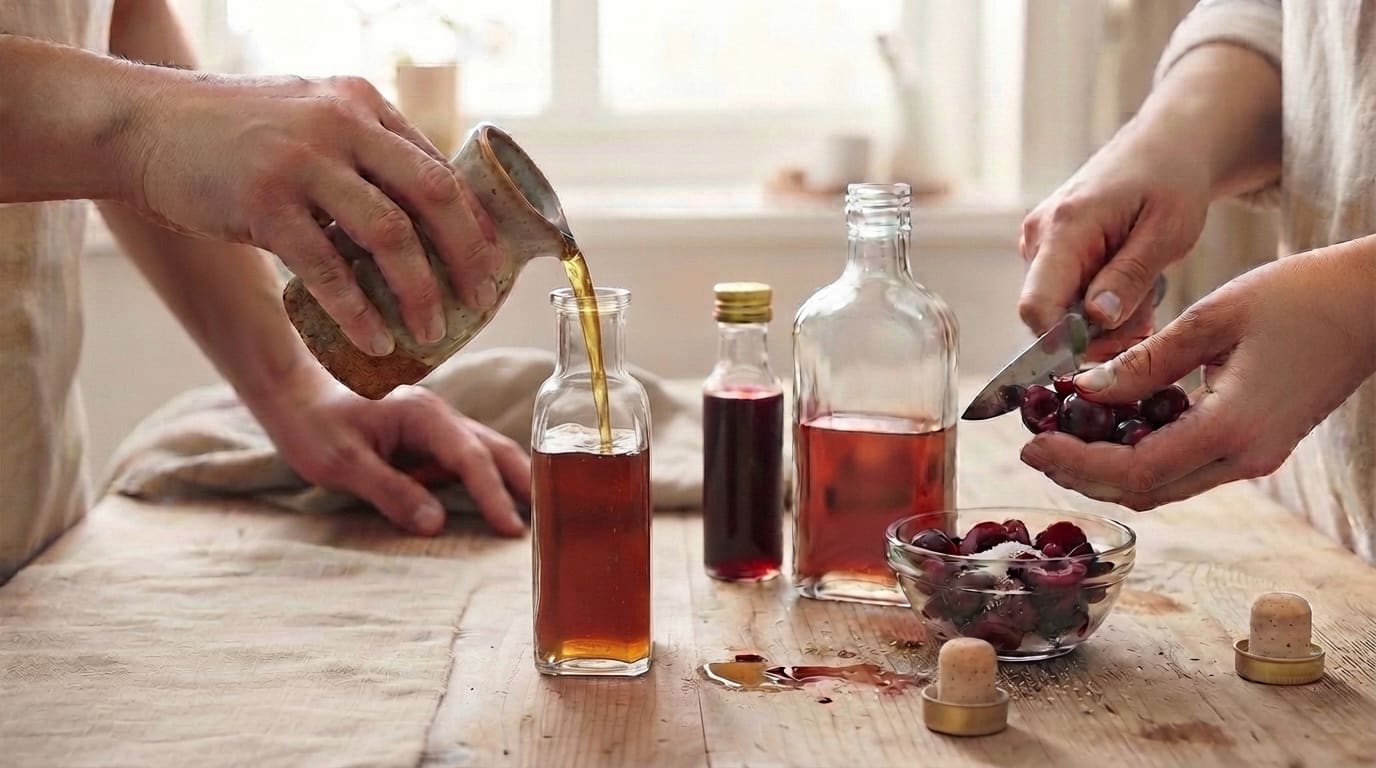
Before You Start: The Mistakes That Make All the Difference
A good recipe does not depend on the ingredients alone. Small precautions during preparation directly influence the flavour, aroma and preservation of the liqueur. Knowing the most common mistakes is the best way to guarantee a good result.
- Choosing low-quality fruit — the fruit is the soul of the liqueur. Whenever possible, use fresh, ripe fruit with no signs of spoilage. The better the raw material, the more intense the aroma and flavour.
- Being in a hurry — a good liqueur does not happen overnight. During maceration, the alcohol slowly draws out the natural aromas and oils of the fruit. Respecting that time makes all the difference.
- Filtering the drink poorly — after maceration it is normal to have small residues. Filtering carefully leaves the liqueur cleaner, brighter and more pleasant to serve. Fine cloth or coffee filters are excellent allies.
- Not sterilising the bottles — clean bottles and utensils preserve the flavour and extend the shelf life of the drink. A few minutes of preparation prevent problems later on.
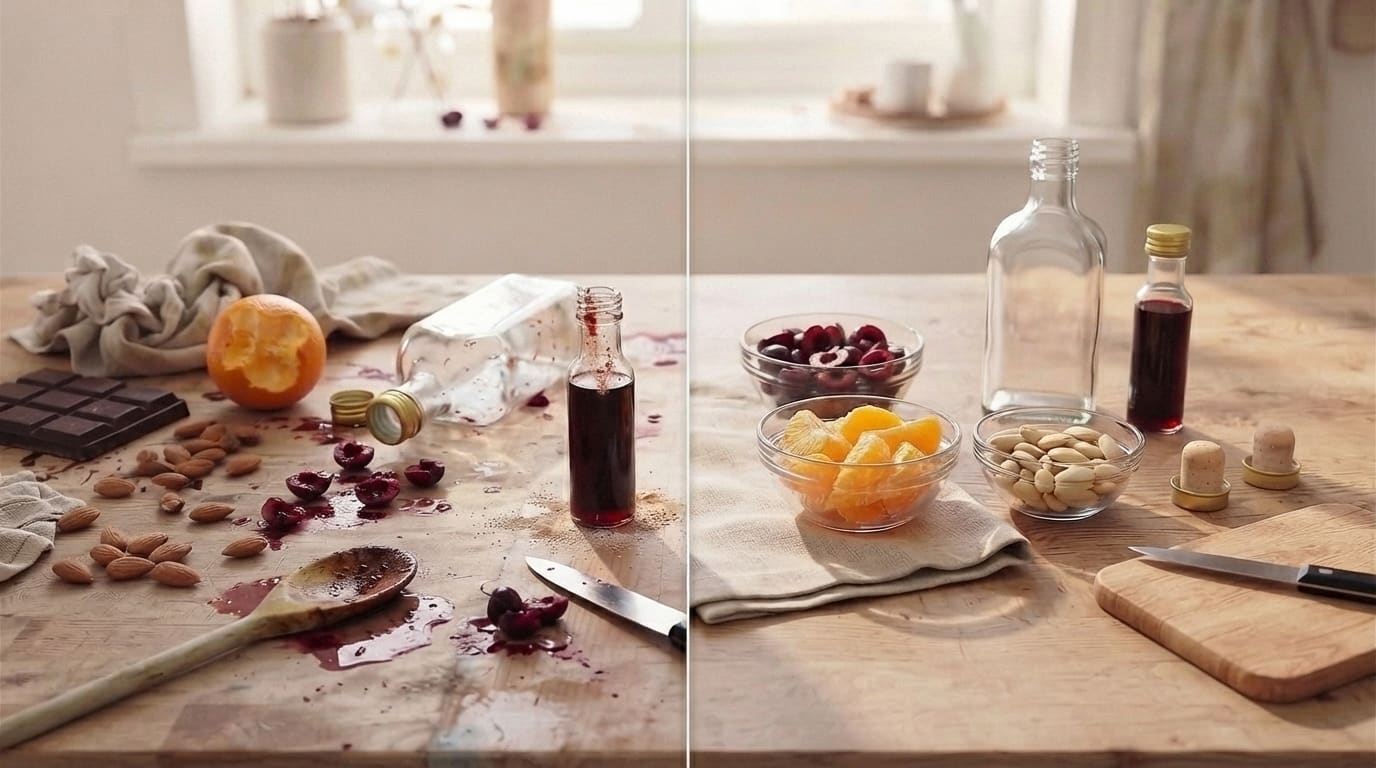
Base Recipe for Homemade Liqueur
This recipe works as a base for creating different flavours: simply swap the main fruit.
Ingredients
- 500 g of fruit of your choice
- 500 ml of aguardente or vodka
- 300 g of sugar
- 250 ml of water
How to make it
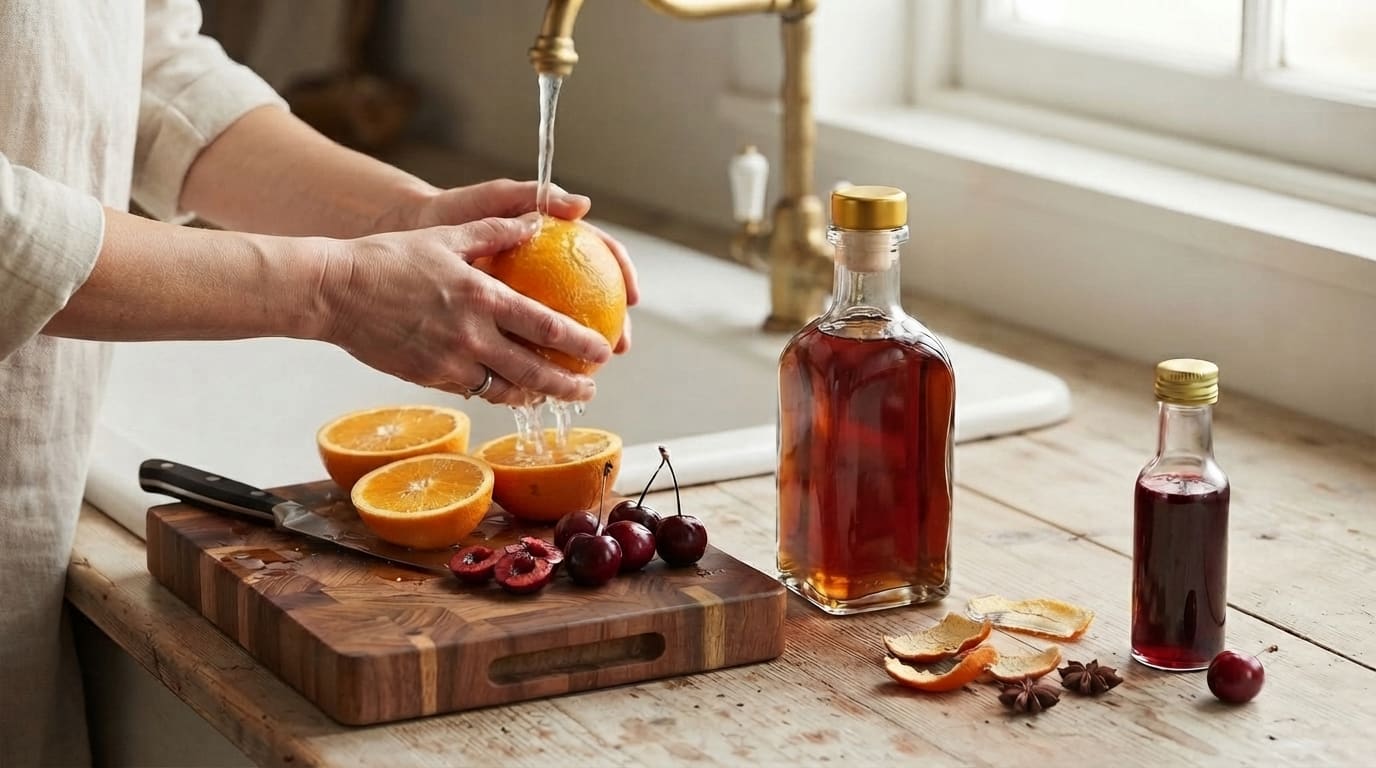
- 1. Wash the fruit carefully and cut it into pieces.
- 2. Place it in a glass container with the alcohol and seal well.
- 3. Let it macerate for about 30 days in a cool place away from light.
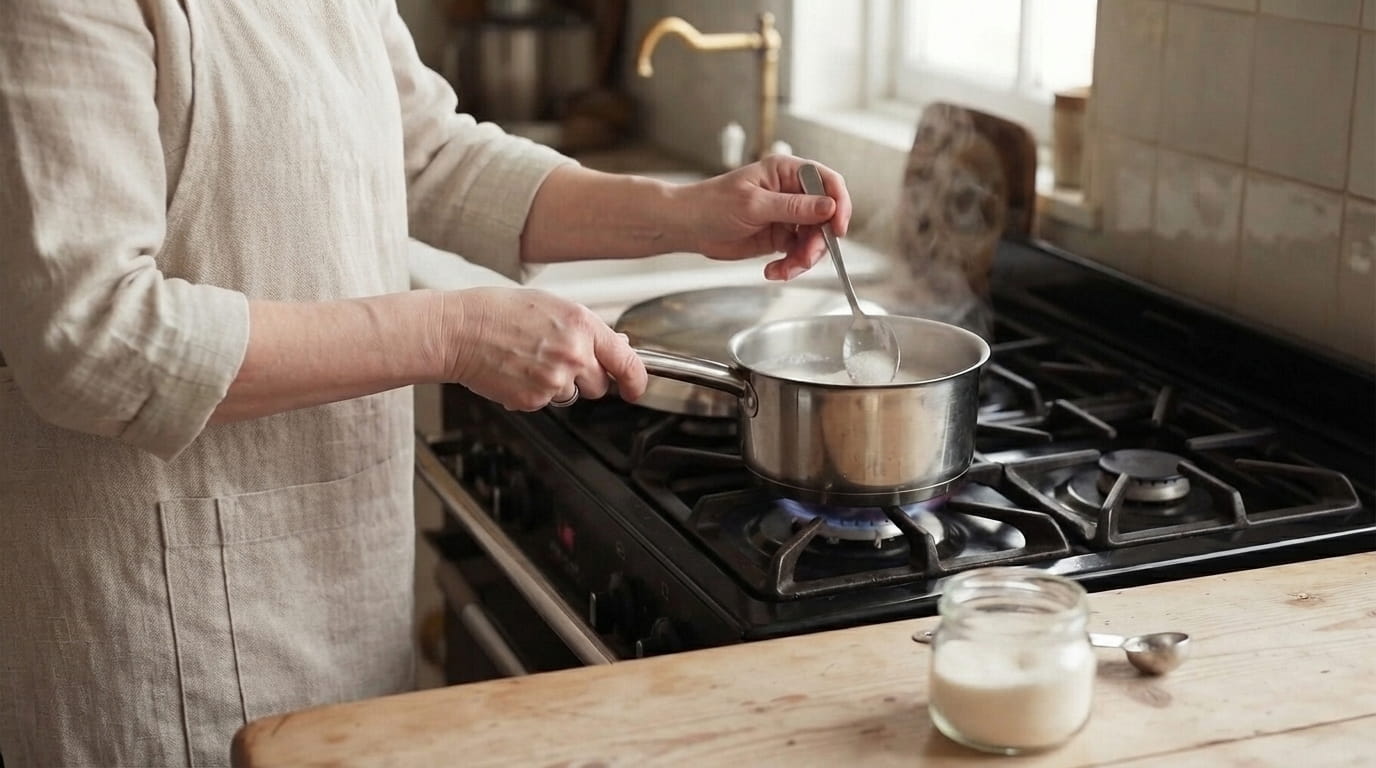
- 4. Prepare a simple syrup with the water and sugar, let it cool and mix it into the preparation.
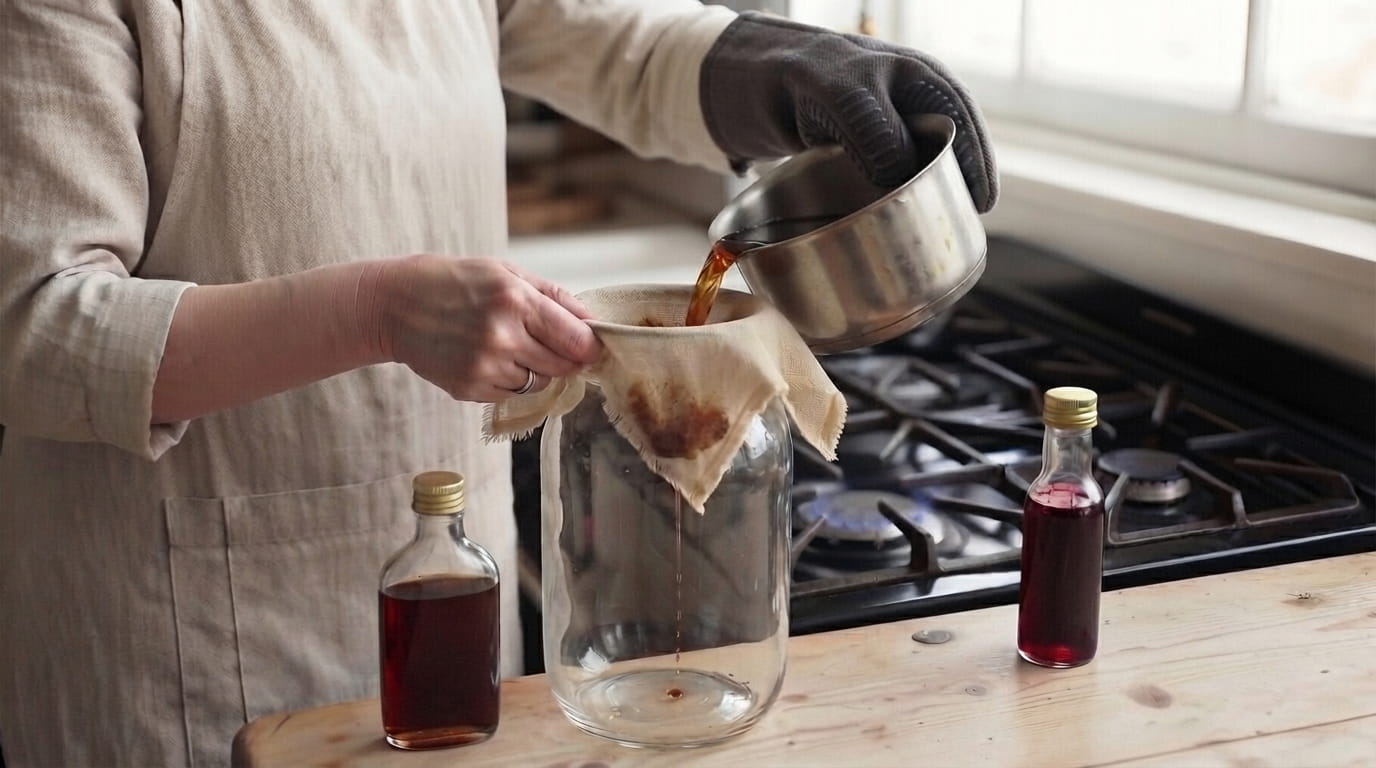
- 5. Filter the liquid carefully and let it rest two to four weeks before bottling.
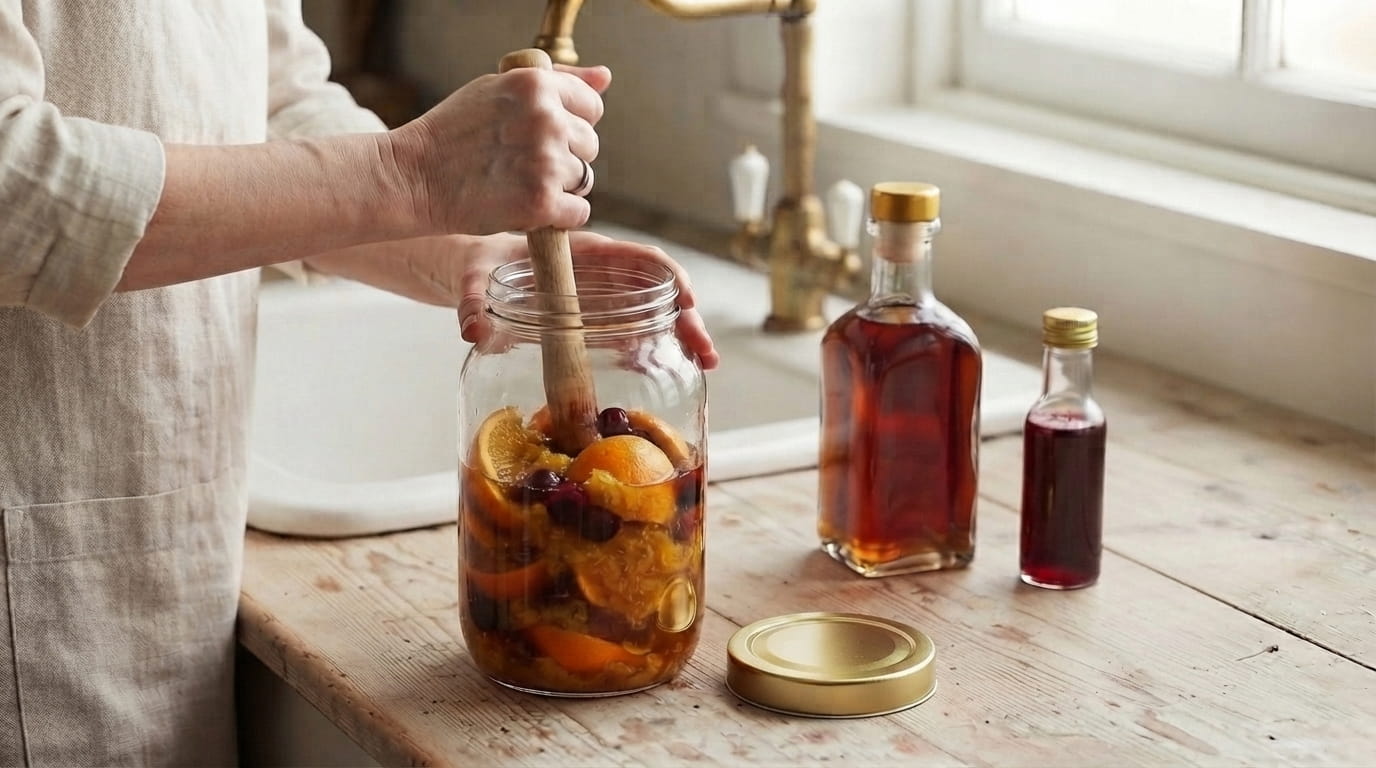
If you make a larger quantity, use a 1750 ml glass demijohn during the resting period: as well as making storage easier, it lets you bottle only once the liqueur reaches its ideal balance of flavour. The more patience at this stage, the better the result.
Proportions and strength
As a general rule, use equal parts fruit and alcohol (1:1) and adjust the sugar to about half the weight of the fruit — to taste. For a milder liqueur, choose a 40° alcohol; for more intensity and better preservation, use aguardente of a higher strength.
The maceration time depends on the raw material: firmer fruits (sour cherry, cherry, plum) call for 2 to 3 months; peels and very aromatic fruits (lemon, orange, tangerine, coffee) release flavour in 2 to 4 weeks.
Flavours that are a success
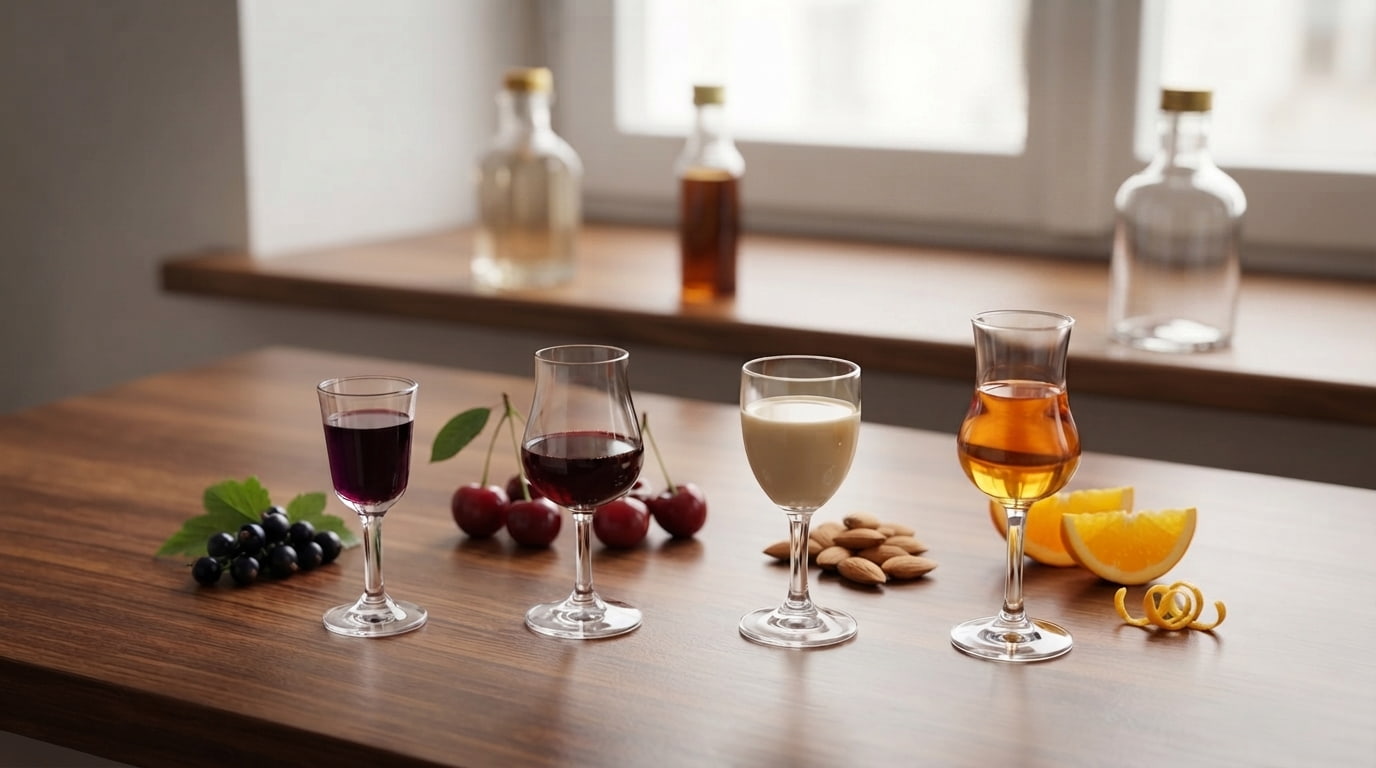
The same recipe gives rise to dozens of combinations — you just need to respect the maceration time and choose good ingredients:
- Lemon Liqueur
- Orange Liqueur
- Cherry Liqueur
- Strawberry Liqueur
- Coffee Liqueur
- Chocolate Liqueur
- Peach Liqueur
- Aromatic Herb Liqueur
What If It Goes Wrong? The Most Common Problems
Even those who have been making liqueur for years run into small setbacks. The good news is that almost all of them have a solution:
- Cloudy liqueur — filter again through a coffee filter or fine cloth and let it settle a few more days before bottling.
- Too sweet — add a little more alcohol or unsweetened infusion; next time, reduce the syrup.
- Not aromatic enough — the maceration was too short or the fruit not ripe enough; extend the resting time and choose well-ripened fruit.
- Too strong — add syrup (water + sugar) little by little, taste and let it rest another one to two weeks.
Writing down the quantities and times of each batch is the best way to repeat the successes and correct the mistakes.
How to Bottle the Liqueur Correctly
After weeks of preparation, the moment comes to fill the bottles — and it is worth dedicating a few minutes to cleaning.
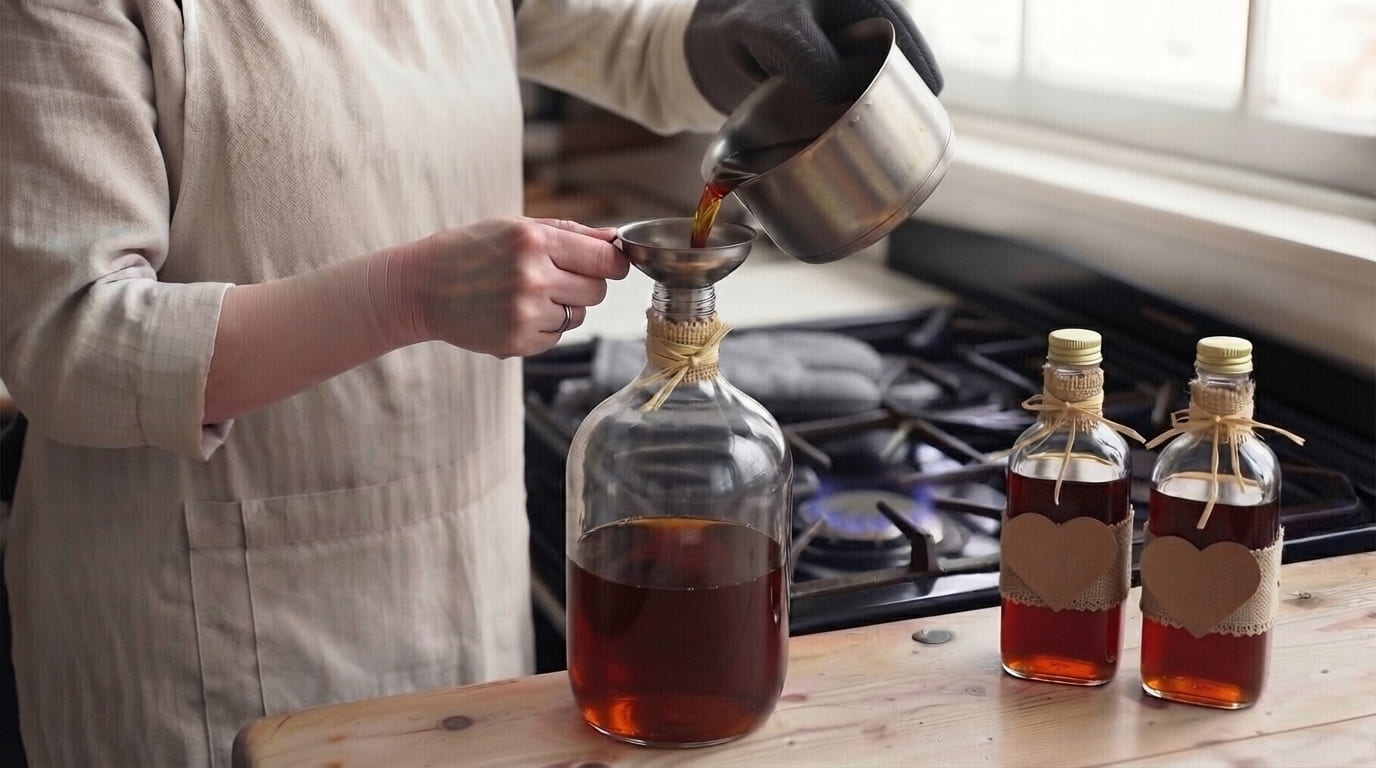
Wash the bottles, caps, stoppers and funnels, sterilise the containers and let them dry completely. Use a funnel to avoid waste and fill slowly, leaving a small gap between the liquid and the cap to ensure a good seal and better preservation.
If you made a larger quantity, let the liqueur rest in a 1750 ml glass demijohn before dividing it into the final bottles: that way you bottle only when the drink reaches its ideal point of maturation.
How to Store Homemade Liqueur
When prepared correctly and kept in well-sealed glass bottles, liqueur keeps its characteristics for many months — in many recipes, the flavour even becomes more balanced over time.
For the best results:
- Store the bottles in a cool, dry place.
- Avoid direct exposure to sunlight.
- Keep the bottle well sealed once opened.
- Label each recipe with the production date.
These are simple precautions that preserve the aroma, colour and flavour.
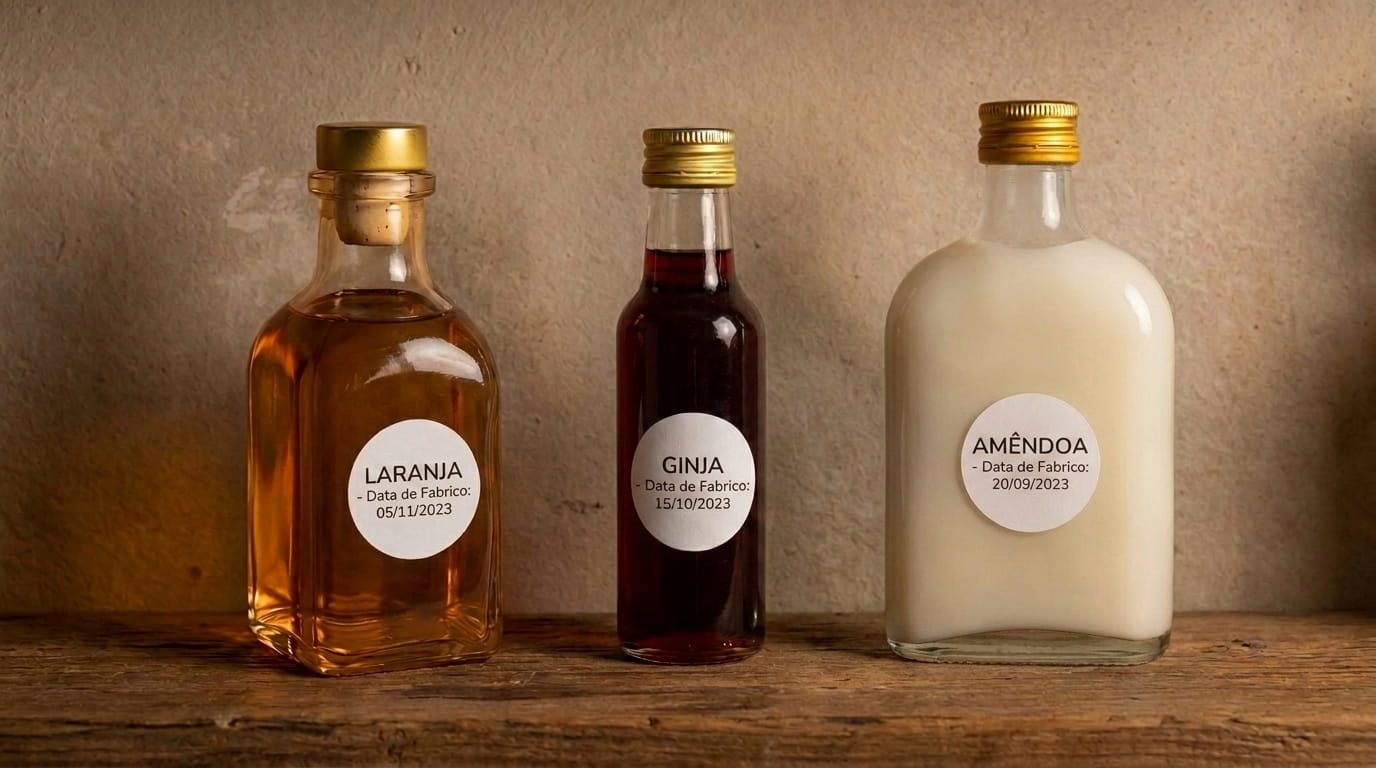
Step-by-Step Recipe: Sour Cherry Liqueur
Of all the traditional Portuguese recipes, sour cherry (ginja) is perhaps the most beloved. Sweet, intense and with an unmistakable ruby colour, it is perfect served in a small glass at the end of a meal — or given as a gift in a beautiful bottle.
Ingredients
- 1 kg of ripe sour cherries
- 1 L of aguardente (bagaceira or sugarcane spirit)
- 600 g of sugar
- 1 cinnamon stick
- Peel of 1 lemon (optional)
- 3 cloves (optional)
How to make it
- 1. Wash and dry the sour cherries well. Remove the stems and prick each one lightly — or leave some whole, with the stone, for an almond-like note.
- 2. Place the sour cherries in a large jar or demijohn with the sugar, the cinnamon and, if you like, the lemon peel and the cloves.
- 3. Cover everything with the aguardente and seal well.
- 4. Let it macerate 2 to 3 months in a cool, dark place, gently shaking it once a week.
- 5. Filter, bottle in a sterilised glass bottle and let it rest a further two to four weeks before tasting.
The result is a full-bodied, aromatic liqueur that only improves with time — ideal for keeping in a dark glass Classic Escura 750 ml, which protects the colour and the aromas.
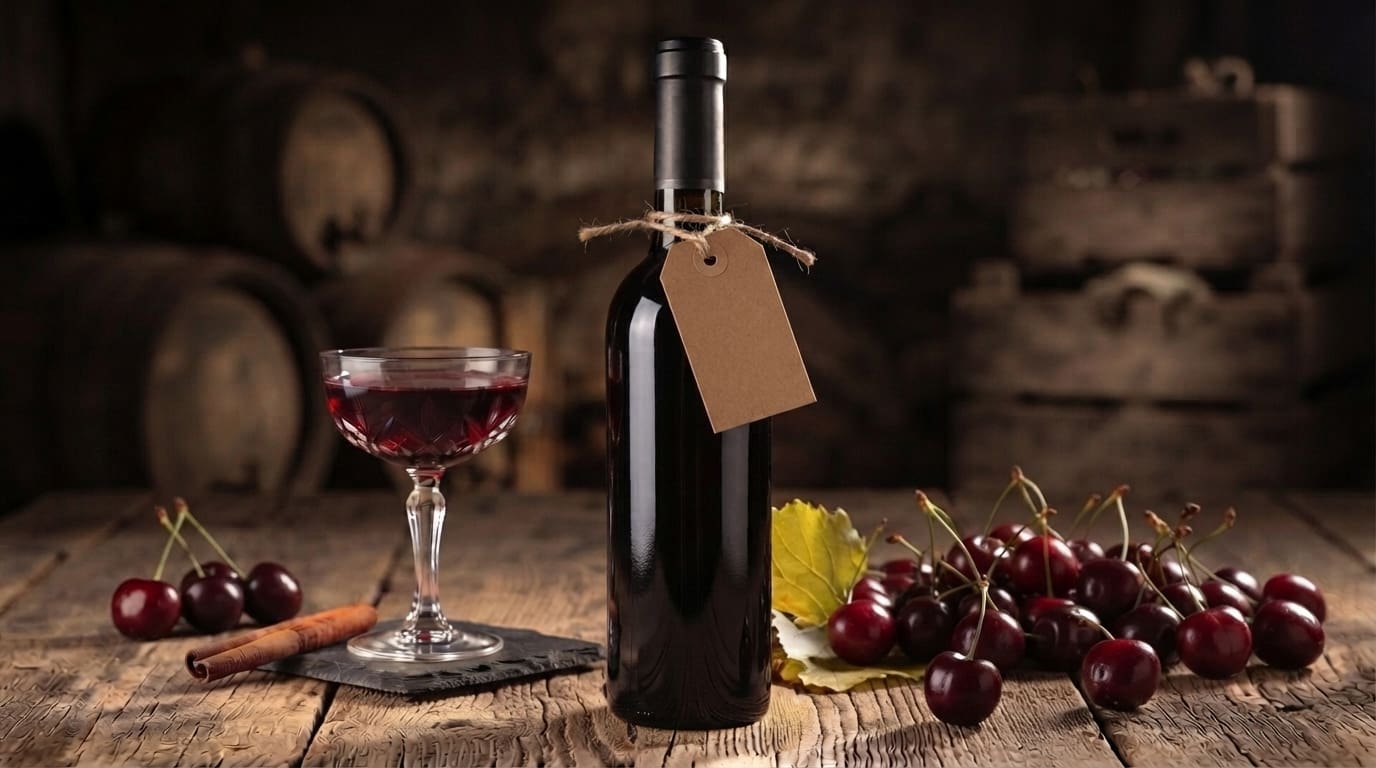
In the photo: Classic Dark Glass Bottle 750ml with Cork →
How to Choose the Ideal Bottle for Your Liqueur
There is no single perfect bottle. More than storing the drink, the bottle protects the aromas, makes transport easier and adds value to weeks of work — and the best choice depends on a simple question: how are you going to share your liqueur? Gifting, selling or keeping it for family moments call for different formats.
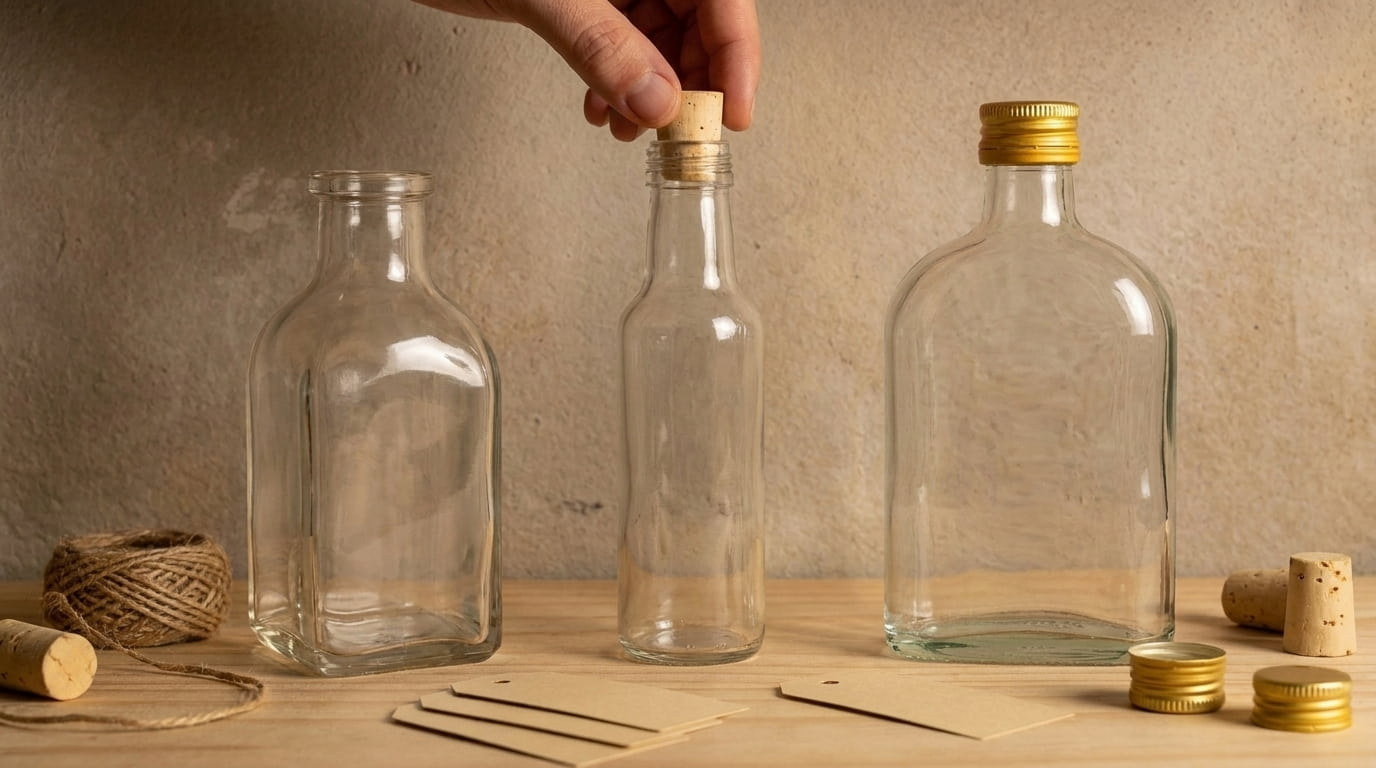
To give as a gift
A handmade liqueur represents time and care — and the presentation becomes as important as the recipe. For gifts, small formats, especially those with a cork stopper, are the most sought after:
- The Endil 50 ml (cork stopper) is perfect for wedding, christening, birthday keepsakes or small Christmas gifts.
- The Nefertiti 70 ml (cork stopper) has elegant lines and a traditional look that enhances any liqueur.
- The Quimera 100 ml has a more modern design and pairs with minimalist labels and contemporary finishes.
- The Valhalla 125 ml (cork stopper) offers a little more quantity without losing the artisanal touch.
With a personalised label, a jute string or a small box, any of them turns the liqueur into an unforgettable keepsake.
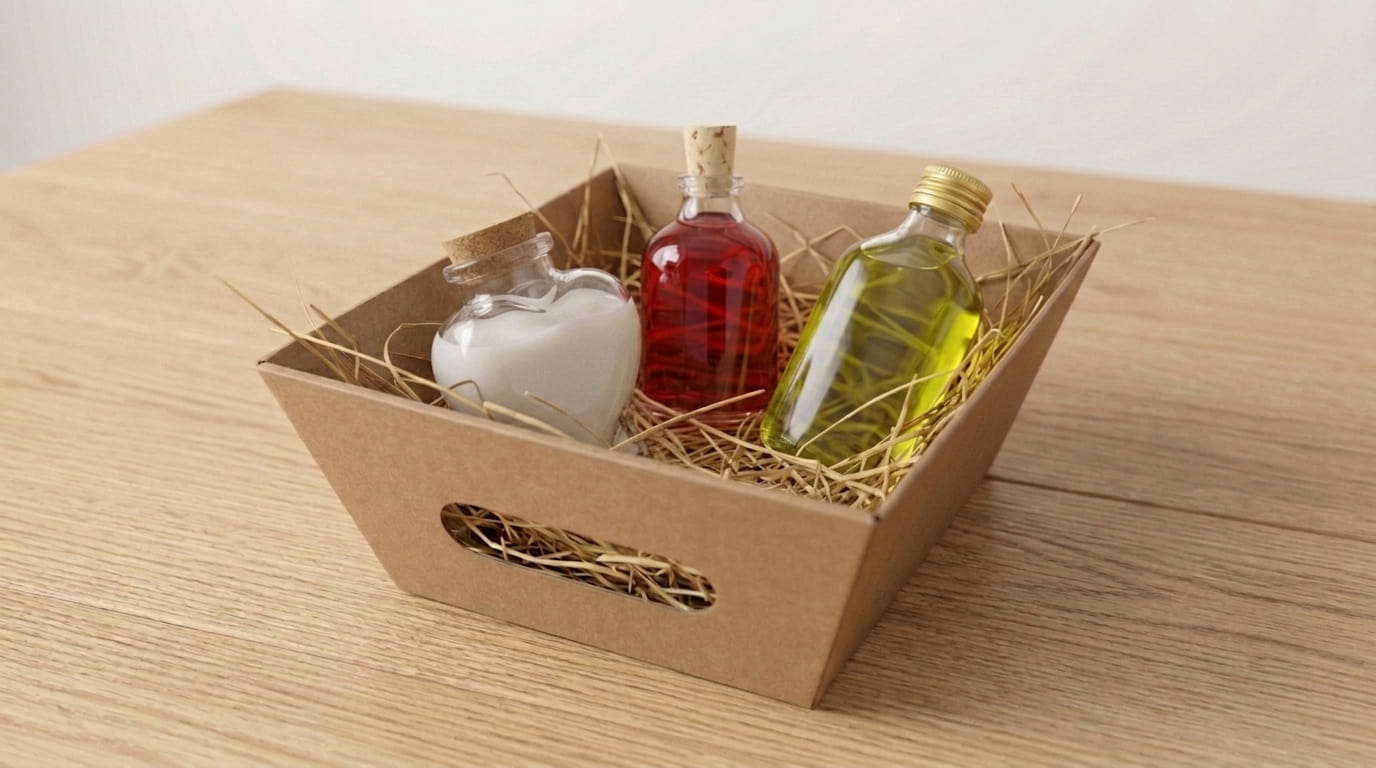
In the photo: Endil 50ml Glass Bottle with Cork Stopper →
To sell at fairs and markets
At craft fairs and gourmet shops, the first impression happens before the tasting: the customer sees the colour of the drink, the label and, above all, the bottle. Formats between 200 ml and 250 ml give the best balance between presentation and quantity:
- The Quimera 200 ml is versatile and adapts to various brand styles.
- The Quimera 250 ml offers more capacity while remaining easy to carry.
- The Harpia 200 ml has plenty of personality and works well in gourmet lines or limited editions.
- The Lira 200 ml has a classic look, ideal for a harmonious collection of flavours.
- The Persephone 250 ml is elegant and balanced, enhancing premium liqueurs of red fruits, coffee or chocolate.
- The Valhalla 250 ml (cork stopper) reinforces the artisanal image on the stall with its cork touch.
Practical tip: choose a single family of bottles and set each flavour apart only by the label and the colour of the liqueur. The result is a more elegant collection and a brand that is easier to recognise.
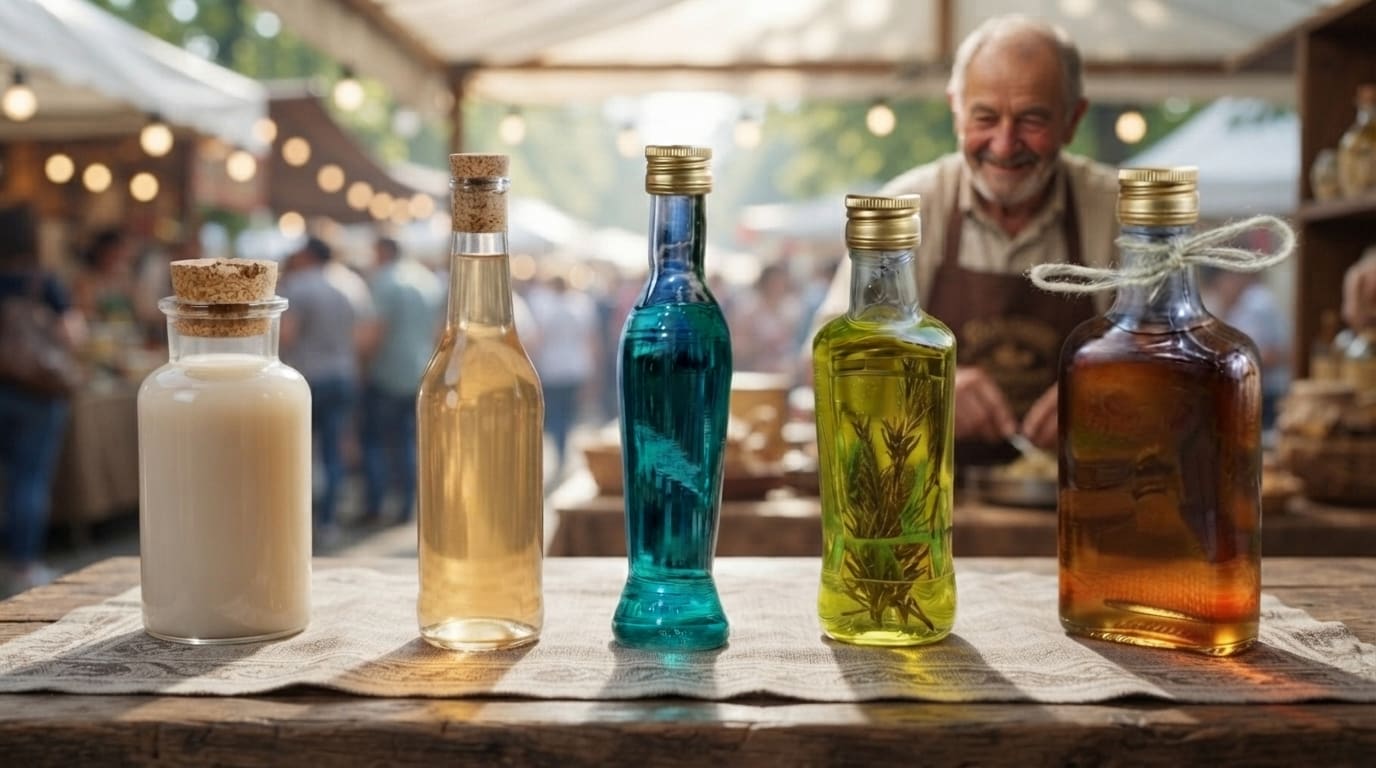
In the photo: Glass Bottle Quimera 250ml →
To share with family
Not all liqueur is for selling or gifting. Many recipes remain part of Sunday lunches and Christmas celebrations — and there the larger formats are more practical:
- The Plutão 500 ml is a balanced format for traditional recipes, always ready to serve.
- The Jupiter 500 ml adapts to different types of liqueur and looks good on any table.
- The Lavanda 500 ml has a sophisticated presentation that suits dinner tables and special occasions.
And if you produce in larger quantities — or like to let the liqueur age —, the 750 ml formats in dark glass are the ideal choice:
- The Classic Escura 750 ml (cork stopper) protects the drink from light with its dark glass and reinforces the artisanal character with the cork; perfect for aged liqueurs.
- The Impérios 750 ml has a striking presence, for larger production without losing elegance.
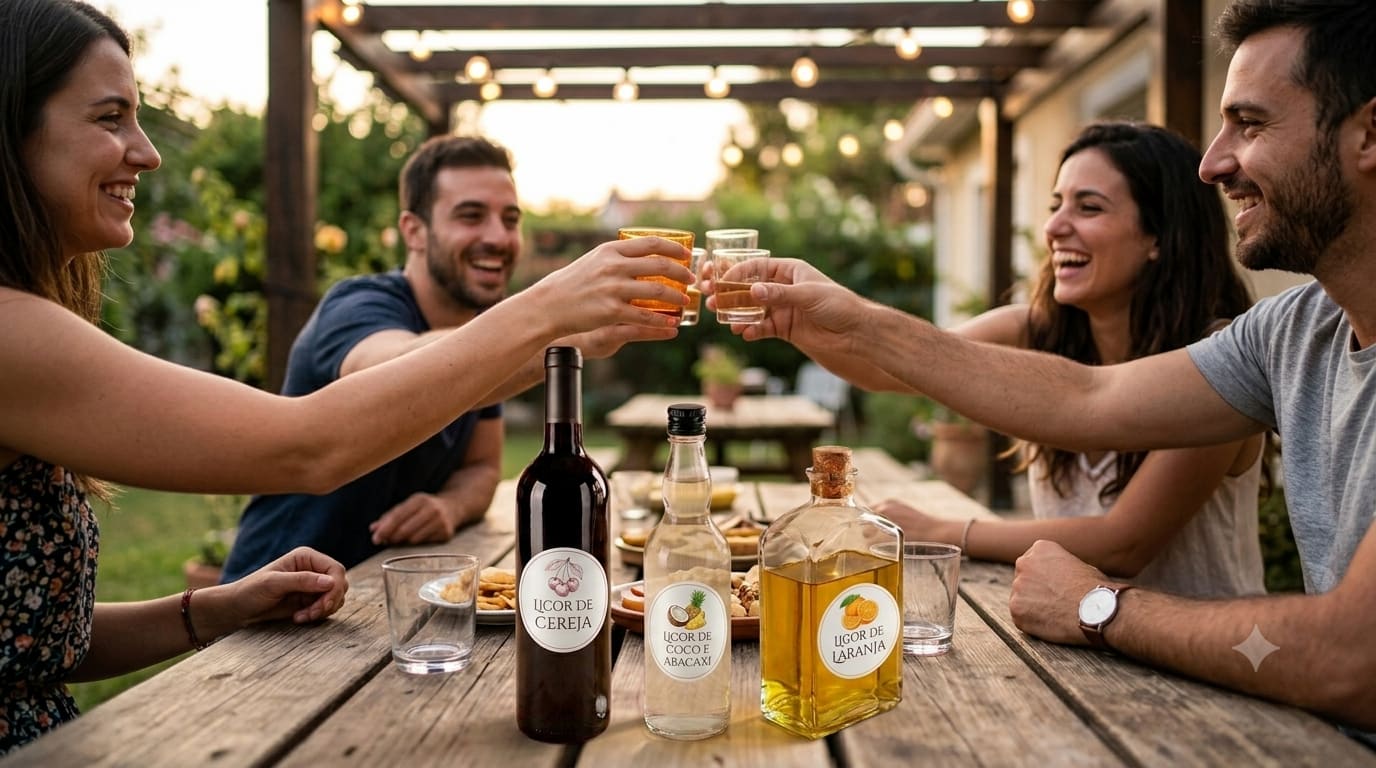
In the photo: Bottle Lavanda 500ml →
Which Bottle Should You Choose?
Each recipe has a different purpose. The table below helps you find the most suitable format for each situation.
| If you want to… | Recommended bottles |
|---|---|
| Create keepsakes for weddings, christenings or events | Endil 50 ml · Nefertiti 70 ml · Quimera 100 ml · Valhalla 125 ml |
| Give an elegant gift | Quimera 100 ml · Nefertiti 70 ml · Valhalla 125 ml |
| Sell at fairs and markets | Quimera 200 ml · Quimera 250 ml · Harpia 200 ml · Lira 200 ml · Persephone 250 ml |
| Serve at home or host friends | Plutão 500 ml · Jupiter 500 ml · Lavanda 500 ml |
| Produce, age or store larger quantities | Classic Escura 750 ml · Impérios 750 ml · Demijohn 1750 ml |
A Liqueur That Holds Memories
A good homemade liqueur starts with good ingredients, but it is the dedication at every stage that makes the difference: choosing the right fruit, respecting the maceration, filtering with care and storing it well.
The bottle is part of that process. More than packaging, it protects the liqueur, enhances the presentation and conveys all the care invested in the recipe — in a delicate cork Endil 50 ml for a keepsake, an elegant Quimera 250 ml for selling, a sophisticated Lavanda 500 ml for hosting friends or a Classic Escura 750 ml for ageing with family.
Because, in the end, a liqueur does not hold only aromas and flavours. It holds moments, stories and traditions that deserve to be shared.
Explore the whole Espírito Rebelde glass bottle collection and choose the perfect bottle for your homemade liqueur — to gift, sell at fairs or keep for family moments.
Featured Products
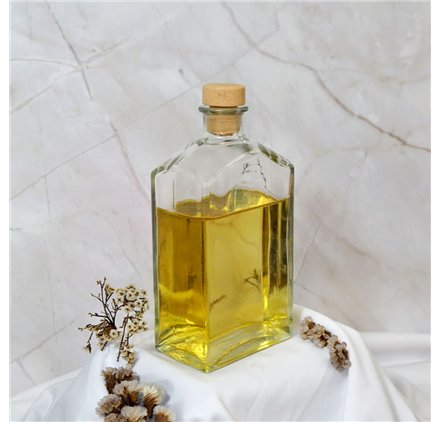
Latest Posts

Learn how to make homemade liqueur: a base recipe, mistakes to avoid, a sour cherry liqueur recipe and how to choose the ideal glass bottle to gift, sell or store.

Which bottle for each handmade cosmetic? Amber glass for oils and serums, jars for creams, perfume bottles and samples. A packaging guide to help you sell.

What a security seal does for your bottle and how to choose between 18 mm, 24 mm and 31.5 mm. Step-by-step sealing, mistakes to avoid and a checklist.

Easy summer recipes in glass jars and bottles: strawberry ice cream, overnight oats, cheesecake, piña colada and pink lemonade. Fresh and ready to go.